-
Recent Posts
Archives
the Poetry kit
JIM BENNETT – Articles, reviews and all things Poetry
Performed Contingency: The Cumulative Song – A short description.
By Jim Bennett
A Bob Dylan song does not exist solely as a lyric, a studio recording, or any single performance. It exists as a *cumulative artistic field* whose identity develops through the historical relations among its successive versions.
Most performance variation is merely interpretative: a stable work receives different realisations. Dylan’s practice often exceeds this model. Lyrics are rewritten after publication, verses omitted, narrative perspectives altered, arrangements and vocal personae transformed across decades. The later performance does not simply interpret an earlier composition; it enters the listener’s conception of what the song has become. Earlier versions remain active in memory and recording; later ones retrospectively reshape their emotional and dramatic significance. The work is neither fixed nor merely successive; it is cumulative.
This process is termed **performed contingency**. Each performance is contingent upon a particular conjunction of voice, age, musicianship, arrangement, venue and historical moment. None is inevitable or final. Yet certain performances become constitutive of the song’s identity. The cumulative work therefore requires five interacting forms of transformation: textual, musical, vocal, personal and historical. Continuity must remain sufficient for recognition; difference must be significant enough to alter meaning; multiple versions must remain culturally available through memory or documentation.
“It’s Alright, Ma (I’m Only Bleeding)” illustrates the process with a relatively stable lyric: the ageing voice and changing arrangements introduce historical distance into the same words, so that defiance can acquire the undertone of endurance. “Tangled Up in Blue” shows radical textual contingency: pronouns, chronology and narrative sequence continue to shift after publication, turning revision itself into a public artistic practice. In both cases the song remembers itself differently.
The theory has wider implications. Western criticism has largely assumed textual stability; performance studies has focused on the event. Performed contingency proposes that under certain conditions performance participates in the ontology of the work. The relevant question is no longer only “what is the work?” but “how does the work continue becoming itself?” Authorship does not end at publication; the artist repeatedly encounters language written by an earlier self and reshapes its future. Similar processes appear, in different degrees, in oral poetry, jazz, theatre and poets reading their own work across time.
Some works achieve completion through closure. Others achieve completion only by remaining open. Dylan’s songs belong to the second category. Their identity resides in the continuity with which they continue changing.
Posted in Uncategorized
Performed Contingency: Towards a Theory of the Cumulative Song in Bob Dylan’s Work
JimBennett
Abstract
Bob Dylan’s songs have rarely remained stable in performance. Across decades he has altered lyrics, melodies, rhythms, arrangements, vocal phrasing and dramatic personae. Existing scholarship has established the importance of performance to Dylan’s art, challenging approaches that treat the printed lyric or original studio recording as definitive. This article develops that argument by proposing the concept of performed contingency. It argues that Dylan’s songs should be understood neither as fixed compositions subjected to changing interpretations nor as sequences of independent performances that replace one another. Instead they become cumulative artistic works whose identities develop through the relationships among their successive versions. Each performance is contingent upon a particular conjunction of voice, musicianship, arrangement, venue, historical moment and artistic intention. Recorded, remembered and understood in relation to other versions, it enters the continuing history of the song. Later performances can alter the meanings retrospectively attributed to earlier ones. Through examination of selected songs across extended performance histories, the article distinguishes performed contingency from ordinary interpretative variation and proposes that the Dylan song exists as a provisional and accumulating field of possibilities. This model has wider implications for textual scholarship, performance studies, authorship and the critical analysis of songs as literature.
Keywords: Bob Dylan; performance; contingency; song; textual instability; voice; authorship; cumulative work
1. Introduction: Where Does the Song Exist?
Where does a song exist? The question appears simple yet conceals a substantial critical problem. A song may exist as words on a page, as a melody, as a published score, as a studio recording, as an individual performance, or as something held in the listener’s memory. These forms overlap but are not identical. The printed lyric excludes vocal tone and instrumental arrangement. The recording captures those elements but fixes what was originally a temporal act. A live performance brings the song into the present yet disappears as it is created unless preserved through recording or recollection.
In much popular music the studio recording occupies a privileged position. It becomes the version against which subsequent performances are measured. Bob Dylan’s practice presents a sustained challenge to this model. His songs repeatedly move between arrangements, genres, tempi, keys and modes of vocal delivery. Lyrics may be omitted, rearranged or rewritten. A composition first associated with acoustic folk may later appear as electric rock, country, gospel, blues or forms resistant to simple generic classification. Even when the words remain substantially unchanged, alterations in phrasing, rhythm, emphasis and vocal timbre produce markedly different dramatic and emotional experiences.
Such changes are not peripheral; they are among the defining features of Dylan’s art. Betsy Bowden’s Performed Literature argued that the live performance, rather than the lyric considered in isolation, is the appropriate unit for analysing Dylan’s work. Steven Rings’s longitudinal study of “It’s Alright, Ma (I’m Only Bleeding)” demonstrated the scale of variation across almost eight hundred performances over forty-five years, describing the song as an analytical “moving target.” These accounts establish an essential point: a Dylan song cannot be adequately understood as a verbal text to which music and performance are subsequently added. The realised song emerges through the interaction of language, musical form, vocal embodiment and occasion.
The present article accepts that foundation but proposes a further distinction. To say that Dylan reinterprets a composition each time he performs it may still preserve an underlying division between a stable work and its variable manifestations. That model does not fully describe what occurs when a song has been publicly revised and reperformed across several decades. The later performance may do more than offer a new interpretation of an established composition; it may enter the listener’s conception of what the song has become. The relationship between earlier and later versions itself generates meaning. The song’s artistic identity then resides neither entirely within an original text nor entirely within a single present performance. It emerges cumulatively through its history.
I call this process performed contingency. Performed contingency describes a work whose identity develops through the accumulating differences among its performances. Each rendition is contingent because it is produced under conditions that could have been otherwise: a particular voice, age, arrangement, ensemble, venue, audience and historical moment. No performance is inevitable, and no version need possess final authority. Yet these contingent acts can become part of the song’s continuing identity. They do not simply follow one another; they act upon one another. A later version can revise the emotional significance of an earlier one, while the listener’s memory of the earlier performance remains active within the experience of the later. The central claim is therefore not simply that Dylan’s performances vary, nor merely that performance is essential to the song. It is that, in particular cases, the accumulated history of performance becomes constitutive of the work. The song is neither a fixed object repeatedly reproduced nor a succession of unrelated events. It is a cumulative artistic field.
2. From Performance Variation to Performed Contingency
All performances vary. Tempo fluctuates, vocal timbre changes and musicians respond to immediate circumstances. Such differences alone do not justify a new theoretical category. Performed contingency must therefore be distinguished from ordinary performance variation.
A conventional model begins with a stable composition that then receives numerous interpretations, much as a Shakespearean play can be staged differently or a classical work performed at contrasting tempi. Each rendition reveals possibilities already understood to exist within the work. Dylan’s practice often exceeds this relationship. The distinction between work and interpretation becomes difficult to sustain because the object supposedly being interpreted does not remain fully stable. Words change. Verses disappear. Narrative perspectives alter. Melodic structures are loosened or replaced. A listener encountering several versions may perceive not one underlying object accompanied by optional interpretations, but a history of transformations whose differences have become integral to the song’s significance.
Three models clarify the distinction. The fixed-work model identifies the song principally with an authorised lyric, score or studio recording; live performances are interpretations of that stable original. The successive-performance model treats the song as recreated on each occasion; every rendition exists primarily in its own present and one performance replaces another without necessarily producing a cumulative object. The cumulative-work model proposed here holds that no individual version fully exhausts the song. Each significant rendition participates in a developing network of relations. Earlier performances remain available through recordings, memory and cultural circulation, while later ones alter the framework through which those earlier versions are understood. The distinction can be stated simply: interpretative variation changes the performance of the work; performed contingency changes the identity of the work through performance.
Not every performance contributes equally. A routine rendition containing minor variations may have little lasting consequence. Performed contingency concerns changes that modify the song’s dramatic, musical, lyrical or historical possibilities sufficiently to enter its public identity. The process involves at least five interacting forms of transformation.
Textual contingency arises when Dylan substitutes words, revises lines, omits verses or reorganises narrative sequence, thereby altering the relation between speaker, subject and listener.
Musical contingency encompasses changes of tempo, metre, key, instrumentation and genre that reconstruct the emotional environment in which the words are encountered.
Vocal contingency treats phrasing, grain, breath, pitch and timbre as constitutive of meaning rather than as a delivery system for an independent text. The ageing of the voice introduces a particularly significant form of historical embodiment.
Personal contingency recognises that a singer’s relationship to words written decades earlier cannot remain unchanged. A song first performed by a young man acquires different implications when voiced in later life.
Historical contingency acknowledges that songs continue to be heard in worlds different from those in which they first appeared. Political events, cultural memories and changes in the artist’s public identity affect the associations brought to a performance.
These contingencies interact. A slower arrangement performed by an older voice may make a previously confrontational lyric sound reflective. A rewritten pronoun may alter the apparent subject of a song. The removal of a verse may change its narrative balance. The song’s history is therefore not merely a record of external changes made to an internal work; the history can become part of the work’s form.
3. Critical Precedents
The proposition that Bob Dylan’s songs cannot be understood solely through their printed lyrics is no longer controversial. Scholarship over the last four decades has recognised that performance is one of the defining characteristics of his work. Studies of vocal delivery, musical arrangement, textual revision and concert practice have moved criticism away from the assumption that the lyric alone constitutes the primary object of analysis. Yet existing accounts have tended to describe performance principally as interpretation, variation or realisation. Even where scholars acknowledge that Dylan repeatedly reshapes his songs, the underlying conceptual model often remains one in which performances are different manifestations of an essentially stable work.
Betsy Bowden’s Performed Literature (1982) remains fundamental in questioning the assumption that literary criticism could isolate the lyric from the performance that gives it artistic life. Her emphasis, however, centres upon the individual performance rather than the cumulative relations among performances separated by years or decades. Stephen Scobie’s Alias Bob Dylan Revisited rejects the notion of a definitive Dylan text and argues that the work exists through the accumulation of its various manifestations. Scobie’s insight is one of the closest anticipations of the present argument, yet the concept of openness remains primarily descriptive; it identifies textual instability without fully theorising the mechanisms through which successive performances interact to generate new artistic meaning.
Paul Williams’s multi-volume Performing Artist places live performance at the centre of Dylan’s achievement and demonstrates that songs evolve throughout the Never Ending Tour. Williams treats performance as the primary artistic arena rather than an appendix to recorded work, yet deliberately avoids constructing a formal theoretical model. More recent work in performance studies, including that of Christophe Lebold, has examined gesture, vocal presence and theatrical embodiment, showing that meaning arises through bodily presence as much as through verbal language.
Steven Rings’s longitudinal analysis of “It’s Alright, Ma (I’m Only Bleeding)” supplies the most detailed empirical account of sustained variation across keys, metres, tempi, genres and vocal parameters. Rings describes the song as a “moving target,” an expression that captures both continuity and continual transformation. His work demonstrates that performance history itself is an appropriate object of scholarly investigation. What remains less fully theorised is the cumulative relationship among those performances: the artistic consequences of difference once it becomes part of the recognised identity of the song.
The present article accepts the achievements of this scholarship—that the lyric alone is insufficient, that performance constitutes artistic meaning, that no single version possesses unquestioned authority, and that performance history deserves sustained attention—while shifting the unit of analysis. The principal object is no longer the individual performance considered separately, nor the abstract song presumed to exist behind its performances, but the cumulative artistic field generated by their interaction.
4. The Song Across Time: “It’s Alright, Ma (I’m Only Bleeding)”
“It’s Alright, Ma (I’m Only Bleeding)” provides a strong test of performed contingency because its verbal density, structural recognisability and extensive performance history allow continuity and transformation to be examined together. First performed publicly in September 1964 and remaining in Dylan’s repertoire until October 2013, the song received 772 documented renditions across almost half a century. It travelled through different phases of Dylan’s career, different musical ensembles, changing political circumstances and radical alterations in his performing voice.
The early acoustic performances and the 1965 studio recording establish the song’s most familiar identity. The austere guitar figure supports a long sequence of densely rhymed verses delivered with urgency and controlled momentum. The young voice creates an impression of intellectual and moral certainty: isolated but defiant, embattled but verbally dominant. It would be possible to regard this recording as the completed work and all later performances as interpretations of it. Its early authority is historical rather than absolute, however; it constitutes the first widely circulated state of the work, not necessarily its final definition.
For performed contingency to operate, a song must preserve enough continuity to remain recognisable while remaining unstable enough for its emotional and dramatic character to be reconstructed. “It’s Alright, Ma” retains strong markers of identity—its title, central verbal sequences, recurring concluding lines and tightly rhymed observations—while Dylan repeatedly alters the musical and vocal conditions under which these markers are encountered. An electric arrangement redistributes the song’s forces; a slower performance creates space around statements that originally passed quickly. The work changes without ceasing to be itself. This may be described as structured instability.
The most consequential transformation is the changing voice. Later performances cannot reproduce the relationship between language and physical capacity that characterised the young singer. The later voice brings historical distance into the song. A line written and sung in youth is delivered decades later by someone who has lived through the cultural conditions the song anticipated or resisted. The older singer is no longer positioned outside the history of the words; he has become part of that history. In a song preoccupied with compromised authority and the pressure of social systems, the movement from prophetic speech toward recollection occurs without requiring a change in central verbal material. When one performer returns to the same language across decades, the audible passage of time becomes impossible to exclude from the work.
The refrain-like conclusions of the song’s sections illustrate how performance revises meaning. Their significance depends upon vocal stress, pace, melodic contour and the space surrounding them. A phrase can sound dismissive, reassuring, bitter, triumphant or exhausted according to delivery. The cumulative listener may hear more than the present tone: an older rendition can recall the clipped assurance of an earlier one even while departing from it. The emotional meaning then arises from a perceived interval between performances. A declaration once heard as certainty may later sound like endurance; defiance may acquire the undertone of survival. The later performance does not prove that the earlier one secretly contained these meanings; the history between the versions produces them.
Historical contingency is equally evident. Statements about political, commercial and religious authority enter new environments with each performance. The observation that even the President of the United States must sometimes be exposed acquired particular charge during the 1974 tour amid Watergate, yet the language itself remains broader than topical satire. The history of the song includes not only alterations made by the performer but meanings activated by audiences and events.
A methodological distinction is required. The complete performance archive comprises all recoverable renditions; the active cumulative work consists of those versions and tendencies that have materially altered how the song can be heard—officially released recordings, widely circulated concerts, sustained arrangement periods and especially consequential revisions. Performed contingency requires history, but it also requires critical selection.
Ultimately the cumulative identity of “It’s Alright, Ma” resides partly in the interval between performing selves. The young Dylan who recorded the song and the older Dylan who continued to sing it are physically continuous but artistically and historically distinct. The later performer encounters language created by his own earlier self. This temporal doubling—author and inheritor, speaker and rememberer—produces a continuing exchange among versions of the song and versions of the performer.
5. Rewriting the Work: “Tangled Up in Blue” and Textual Contingency
If “It’s Alright, Ma” demonstrates how performance can transform a comparatively stable lyric, “Tangled Up in Blue” presents a more radical case. Here instability extends into the verbal structure itself. Dylan has repeatedly altered pronouns, chronology, perspective, narrative sequence and individual lines throughout its performance history. The song first appeared on Blood on the Tracks in 1975, yet even before release it had undergone significant revision during the New York and Minneapolis sessions. The officially released version already represents one stage within a developing compositional history. That history did not end with publication.
Literary criticism generally distinguishes composition from revision: composition creates the work; revision improves it before publication. Dylan unsettles this distinction. His revisions occur after publication, after commercial success and after the song has entered public consciousness. They are not corrections leading toward a final text; they become part of the public history of the work. The audience becomes witness to composition continuing through performance. Revision ceases to function merely as preparation and becomes an artistic practice.
One of the most striking features is the continual instability of narrative perspective. Pronouns shift; the distance between narrator and character changes; time folds back upon itself. These characteristics are present in the album version but later performances frequently intensify them. Rather than weakening the song, such instability appears central to its power. The listener abandons the expectation of one correct sequence of events and instead encounters something that resembles memory itself—non-chronological, self-revising, allowing one moment to illuminate another separated by years. The cumulative performance history mirrors this psychological process: the song remembers itself differently.
The question “Which version is the real ‘Tangled Up in Blue’?” exposes the limitations of fixed-text criticism. Each answer excludes too much. Each performance preserves recognisable continuity while introducing changes sufficiently important to alter understanding. The cumulative work cannot be identified with one privileged moment; its identity lies within the historical conversation among those moments. A changed pronoun can redirect sympathy; a revised sequence can alter causality; the omission of a familiar verse creates a silence that earlier performances continue to occupy in memory. Meaning develops not only through what is spoken but through remembered absence.
Earlier versions never entirely disappear. A listener who has lived with the album recording hears traces of it when encountering later performances; those who first encountered a later version often return to the original with altered expectations. The relationship operates in both directions. Accumulation is not the addition of independent versions one after another but the continuing interaction among versions that remain simultaneously active within cultural memory. “Tangled Up in Blue” is therefore not a sequence of corrected texts moving toward perfection. It is a continuing act of artistic becoming. Its revisions are not external to the work; they are among the ways in which the work exists.
6. Towards a General Theory of the Cumulative Work
Although the argument has been grounded in Dylan’s songs, performed contingency is not confined to him. Dylan’s extraordinary performance history makes visible a process that may operate, in different forms and degrees, across a wider range of artistic practice. The central question becomes not merely what a Dylan song is, but what a work is whose identity continues to develop through performance.
Western literary criticism has largely been shaped by the assumption of textual stability. Even where variants exist, the critical task has usually been to establish the most authoritative version or to explain the history of revision leading toward publication. Performance occupies a different position: the actor interprets Shakespeare; the musician performs Beethoven; the poet reads a finished poem. The work itself is presumed already complete. Performed contingency questions that assumption under particular conditions: when performances become historically consequential, they may participate in the continuing formation of the work.
Oral poetry provides an obvious precedent. Homeric epics almost certainly existed in multiple performed states before assuming written form; ballads and folktales accumulated variants as they travelled. Milman Parry and Albert Lord demonstrated that oral composition depends upon continual recomposition during performance rather than verbatim repetition. Dylan’s songs reverse the usual sequence: they begin with recording and publication before re-entering a prolonged period of public variation. Jazz offers another comparison. Improvisation develops around relatively stable harmonic structures while leaving the composition recognisable; Dylan often alters not only musical treatment but lyrics, narrative structure and vocal identity. Theatre distinguishes more clearly between text and production; Dylan collapses author, performer and reviser into the same person, creating a dialogue between successive versions of the same artistic self.
The phenomenon also illuminates the practice of poets reading their own work. A poem printed decades earlier may remain textually unchanged while its performed identity develops considerably. Breath alters, rhythms shift, different words acquire emphasis, experience reshapes emotional perspective. Textual stability need not imply performative stability. A poem may accumulate meaning through repeated readings even when every word remains unchanged; in such cases the cumulative identity resides in the historical interval between performances.
Memory is the neglected medium of accumulation. A listener who encounters only one version experiences a performance; a listener who knows several experiences relationships. The earlier performance survives as comparison. Meaning emerges within an act of recollection. The cumulative work therefore exists neither exclusively in the text nor exclusively in the performance, nor solely within the performer. It exists within a dynamic relationship joining work, performer, audience and memory across time. Its ontology is fundamentally historical.
Several conditions appear necessary for a repeatedly performed work to become cumulative in this sense: sufficient continuity to remain recognisable; differences significant enough to alter interpretation; cultural availability of multiple performances through memory, recording or documentation; entry into public consciousness sufficient for comparison; and openness to future transformation. Dylan becomes important not because he is unique but because his career reveals these conditions with unusual clarity. Few modern artists have returned so persistently to the same body of work across six decades while altering lyrics, arrangements, genres and vocal personae with such consistency and generating such extensive archival documentation.
7. Philosophical Foundations
The theory of performed contingency occupies an intermediate position between the stability of the work and the event of its reception. The work is neither a fixed object nor an endlessly fluid sequence of performances; it becomes itself historically.
Roman Ingarden argued that a literary work possesses a degree of incompleteness until realised through reading; different readers produce different legitimate concretisations while the work retains an underlying identity. Performed contingency accepts this insight but relocates the crucial acts from reading to performance. The work is not merely realised differently; under particular conditions it is historically altered through those realisations.
Hans-Georg Gadamer’s account of historically effected consciousness and the fusion of horizons emphasises that understanding emerges through historical dialogue. Performed contingency extends the principle: the dialogue occurs not only between present interpreter and inherited text but between successive performances, each carrying its own historical horizon and encountering the remembered history of previous ones.
Paul Ricoeur’s distinction between identity as permanence (idem) and identity as continuing selfhood (ipse) illuminates the cumulative song with particular clarity. A performance preserves enough permanence to remain recognisable, yet its identity also changes through continued historical existence. Continuity need not require immobility; identity may consist precisely in historically unfolding continuity.
Nelson Goodman’s distinction between autographic and allographic arts explains how multiple authentic performances may instantiate the same musical work. Yet it leaves open the question of what happens when later performances permanently alter how earlier performances are understood. Successive performances need not remain ontologically equivalent; some transform the future identity of the work.
Despite their differences, these accounts share an assumption: each attempts to explain how identity persists despite variation. The missing dimension is cumulative history—not merely history surrounding the work, but history entering the work. For certain kinds of work, performance is not subsequent to ontology; it participates in ontology. The work becomes what it is through its history of performance. This does not imply that every performance changes the work, nor does it deny the importance of textual stability. It proposes that under particular historical conditions certain performances become constitutive. The ontology of such works is therefore historical rather than static.
The most significant implication is a shift from an ontology of being to an ontology of becoming. Traditional criticism frequently asks what the work is. Performed contingency suggests a different question: how does the work continue becoming itself? The work no longer resembles a finished object awaiting interpretation, nor does it dissolve into disconnected events. It possesses a history that is not merely external chronology but part of its artistic constitution.
8. Conclusion: From the Finished Work to the Continuing Work
This article began with a deceptively simple question: where does a Bob Dylan song exist? Each familiar answer—lyric, melody, studio recording, concert performance, remembered cultural artefact—proves incomplete. The lyric cannot account for vocal embodiment; the recording cannot account for decades of transformation; the individual performance cannot explain the continuing interaction between earlier and later versions. No single location proves sufficient. The work exists historically across them all.
Performed contingency describes the process by which a performative work acquires and revises its artistic identity through the cumulative interaction of historically situated renditions, none of which alone possesses complete or permanent authority. Variation alone does not constitute performed contingency. What distinguishes the cumulative work is that some performances permanently alter the conditions under which later performances—and even earlier ones—are understood. They enter the recognised identity of the work itself.
Dylan’s career provides unusually rich evidence. Across six decades he has continually altered lyrics, arrangements, genres, tempos, vocal timbre and dramatic emphasis. His performances invite audiences not simply to compare different versions but to hear them simultaneously. Earlier performances remain active within memory while later ones retrospectively transform them. The song therefore develops a history that becomes artistically constitutive.
The implications extend beyond Dylan studies. Literary criticism has traditionally sought the work within textual stability; performance studies has frequently sought it within the event of performance. Performed contingency suggests that some artistic works occupy neither position completely. They exist within an evolving historical relationship joining text, performer, audience and memory. Authorship is likewise reconsidered: publication does not terminate creation; performance continues it. The artist repeatedly encounters the work as both creator and reader, composer and interpreter, inheriting language written by an earlier self while reshaping its future.
The same questions arise, in different forms, in oral poetry, dramatic performance, jazz improvisation and poets reading their own work across many years. Wherever recognisable continuity coexists with historically significant transformation, the cumulative work becomes possible. Dylan remains an exceptional example because few modern artists have allowed us to observe this process so continuously or so publicly. His songs demonstrate that performance need not merely preserve a work; it may enlarge it, revise it, and reveal possibilities that did not fully exist before the performance itself.
Some works achieve completion through closure; others achieve completion only by remaining open. Dylan’s songs belong to the second category. Their identity resides not in resistance to change but in the continuity with which they continue changing. The song exists not in the page or the recording or the performance alone, but in the unfolding history through which each of these continues to illuminate the others. The song exists in its becoming.
Posted in Uncategorized
Poem of the week
Somewhere in Liverpool by Jim Bennett
I wrote the poem “SOMEWHERE IN LIVERPOOL” 25 years ago. It was about a time much further back, 1967 and my early forays into performing poetry. The poem appeared on my CD “DOWN IN LIVERPOOL” in 2001.
You can hear me read the poem from the CD here https://poetrykit.org/27.wma
somewhere in Liverpool
we were poets we were scousers
and it was the Summer of Love
now as I write this it is the end of the century
thirty years on from the days
when long haired rough spoken poets
wandered into O’Conners
and screamed their poems above the bar noise
now hairy academics look back on our lunacy
see the shadows left in books
but can never grasp what t was really all about
but they still tell us what we felt
why we did it say that we don’t matter
we were never a movement never relevant
we were just performance poets
café and barroom entertainers
as if that is something less important
than book published poetry
read quietly self consciously
to yourself on a bus to Speke
or studied under anglepoise
in a musty prep room
our poetry was different
it came alive when the lights went off
they tell us that we were second rate
that we were stoned
on psychedelic hallucinogens
well some things you just cannot argue with
but poetry was the new thing
it gave us a voice
in Leece Street there was a club Monday night
poetry read at your own risk
you could get up and read whatever you wanted
and in the reading of poetry
we wrote the manifesto for a new world
I suppose we must have had brain damage
the poems were good the poets were better
Roger Clive Adrian Sylvia
three Johns two Daves and two Marys
and all the other name forgotten faces
whose nasal voices echoed through the streets
and how we all loved words real words
to be used with energy portmanteau words
like scaffoldills new metaphor and simile
that slopped around the walls
like jelly and sticking to us forever
and when we found a word it was treasure to be horded
and I still have my notebook of gems
my vocabulary of dissent
my own often read little red book
and every word has a subtext texture
that echoes with the moment it was first said aloud
in a smoky room or bar corner
somewhere in Liverpool
somewhere in Liverpool
where we are poets
we are scousers
and it is still the Summer of Love
Posted in Uncategorized
Gladsongs and Gatherings

Gladsongs and Gatherings, The Story of Poetry in Liverpool and its social context since the 1960’s Edited Stephen Wade. Extract from a chapter by David Bateman.
“Another new figure was Jim Bennett, a veteran of the 1960s live poetry scene who’d been going to O’Connor’s back in the days when he was too young to. Beat[1]influenced and very prolific, he was also doing readings in the USA under the cryptically crude pseudonym of Richard Dripping. He also wrote and sang songs and played guitar but was mostly too shy about it for his own good. In August 2000 Long Neck Media released Jim Bennett’s CD Down In Liverpool. At times reminiscent of Adrian Henri and Andy Roberts, it’s a nice bunch of poems and songs.”
Posted in Uncategorized
That’s it then…
“That’s it then.”
“Any chance of slowing down.”
“Not a hope sir. I think that’s it.”
“We… we’ll crash into this unknown old rock then.”
“I suppose so.”
“Communications, let the crew know.”
In the background a siren and a recorded message, “brace for impact” repeats.
“Turn that noise off on the bridge.”
“Check auxiliary power again , anything?
“No sir, not a spark.”
“Okay. That’s it then.”
“What a way to go.”
“Well at least it will be quick.”
“I just hope that it won’t hurt. I don’t want it to hurt.”
“For goodness sake man, pull yourself together. You will be crying next.”
“Sorry sir. Just feeling a bit… you know.”
“No I don’t know, and what’s more I don’t want to hear it.”
“I feel sorry for the crew in the explorer, just the two of them and no way back.”
“Well there are two of them and they will get lots of time to think about survival.”
“I hope that they do. “
“Oh Adam and that girl who likes snakes, what’s her name. Oh, I don’t know but that rock looks liveable. They could do well.”
“Ok 20 seconds to impact.”
“Sir there was something I always wanted to say to you. Since we have flown together. I always wanted to say…”
Posted in Uncategorized
50 years ago this month
In September 1972 I won my first ever contest. It was for longer narritive poems and this was it. The 1972 winner of the McMillan Prize worth was at the time a staggering £50. (Quite a bit in those days.)
THE WATCHMAN
(1)
it’s not the cobweb curtained wood beams
or the peeling plaster
it’s not the familiarity
there is something odd about this place
with which the smell greets you
or the noises that sound like footsteps
or the wind that creaks old timber
or the drips of last night’s rain
dropping into pools collecting on the dance floor
it’s not the smell of burning wood
or the broken charred tables and chairs
or the stairs collapsed in the corner
or the holes in the roof
that capture sky
it’s none of those
but it is odd
this place is my Titanic
my ocean bottom ruin
brought onto land
and left to rot on the harbor side
it was the place we met
and the place we parted
and you haunt it still
living in the shadows
crack wood or flick a stone
always just out of sight
but I know you are there
and I frighten the children away
so that we can be alone
night crashes in through the veranda window
the moon reflects from the wet leaves
of the Rhododendron
and your shadow flickers in the corner
while I watch content to know you are close
outside the bulldozers wait
for morning
(2)
I can measure
the time we where together
in nights punctuated by
the red glow of a cigarette
after we had sex
and an occasional moon slicing through
a curtain gap
reflecting off sweat stained skin
so much of our time
spent in the dark
and in the morning
as I watch you change the sheets
to take away the carnal damp
and the smell of me
I hear you hum
the drunken street songs from the night
when I thought you were asleep
that’s how it was
but although I always hoped
you would wait for me to leave
before you changed the sheets
you never did
(3)
when it was new
the silver tiled ceiling
above the dance-floor
reflected a thousand
broken fly-eye images of you
you danced alone
arched back
to smile at leering faces
and I watched
content to admire
the swirling sweating body
that would later lie with me
later
your laughter
woke me
before
it turned to screams
in the morning
the bulldozers
will wipe my sheet clean
(4)
you lay quiet
once you knew
I could never let you go
you should not have tried to leave
no word
no note
just going
without me
and laughing when I said
we could be together
you stopped screaming
as my hands tightened
around your throat
small in death
sleeping under the dance floor
you emerge each night
to dance for me
then hide in dark corners
and even when I bring fire
to flush you out
you still avoid me
tomorrow
the bulldozers come
to wipe you away forever
I hear you creeping round
bone footed
clattering as you dance
sometimes I feel
the touch of your cold hand
the warmth of life left you
cold and hard in death
I hear you
moving through the building
moving closer
and there
there are other sounds
others moving
I cannot see them in the dark
but catch a hint of movement
and the smell of rot
like something decayed
outside the bulldozer
engines wind into life
headlights cut
through the dirt
and soot stained windows
sending shadows fleeing
(5)
there is something odd about this place
the polished wood beams
the mirror tiled ceiling
and you dancing
head back laughing
at the familiar
leering faces
while I watch
content to admire
the swirling sweating body
it’s none of those
but it is odd
the way morning
never comes
Posted in Uncategorized
Enfield Poets Poem of the Month September 2022
a cabin by the lake by Jim Bennett


Posted in Uncategorized
Enfield Poets Ekphrastic Exhibition 2022
The Enfield Poets organised a fine ekphrastic exhibition in
the Culture Palace, Palace Exchange Shopping Centre
29, Palace Gardens Shopping Centre, Enfield EN2 6SN
The exhibition was in place for two weeks from 3rd April 2022

Anthony Fisher with Katherine Stockton who curated the exhibition

Passover, is an ekphrastic specula, from the exhibition by Jim Bennett
(Photos by Anthony Fisher)
Posted in Uncategorized
DEVON, THE DEMON SLAYER – 1
DEVON, THE DEMON SLAYER
PART ONE
Hazel rode along the path at the edge of the wood, her horse, Packet, following the familiar trail. To her right the moorland dotted with sheep ran down towards the river Axe and the fields beyond with their signs of the first of the year’s growth. A couple of miles ahead the lane turned up the hill and through the trees and it would lead up to the gates of Devon Castle where Staunton would be waiting to see what she brought back from her hunt and forage. It had been being a bad day and she had little to show for it apart from some herbs, berries, and a skinny Moorhen.
As she was busy making up an excuse when a horse stopped and started to back up, immediately she pulled her bow and knocked on arrow, expecting an ambush at any moment. Instead the ground began to shake and from the trees came a sound like thunder, so loud and so close that she pushed her hands over her ears. It was followed by the sound like wood burning. Her horse was wanting to turn and run but she controlled her with a familiar voice of reassurance. Packet settled but still anxious was encouraged to move forward.
As she moved, still with bow ready, could smell something that reminded her of a blacksmith’s forge. She could not understand what had happened but encouraged Packet on and they made it to a clearing in the wood leading to the castle. They moved on causiously and Hazel was aware of the silence that had fallen on the wood. All of the familiar sounds, the rustles in the undergrowth , the screeching calls of the birds were all absent and along the ground was a creeping mist. Hazel carried on but eventually Packet stopped as they moved to the edge of a largeclearing that had never been on the path before.
Hazel looked around at an almost perfect circle with tree trunks lying around broken and flat against the ground not splinted but looking almost cut through. The branches stripped and flung into a mass of twigs at the edge of the clearing it was as if some giant hand had done this. In the centre smoke was still rising from what looked like a burned circle. Hazel, still on Packet, sat uncomprehending , just looked at the scene before her. And as she looked she realised that all the fallen trees were pointing to the dark burnedheart of the circle. “What do we make of this, Packet? Lightning perhaps?” she answered herself. “Perhaps it was lightning.” She said, patting Packets neck. She was about to move on when she saw something else. In the burned centre of the clearing something was moving.
Posted in Devon, the Demon Slayer
IDEAS FOR WINTER 2021
DEAS FOR WINTER 2021
Here are some choice poetry reading and music ideas for those Winter nights.
The first is ON THE ROYAL ROAD by James Bell from Shearsman Publications

James Bell the poet who wrote “On the Royal Road” died earlier this year. He left behind him a body of work that many would be proud to put their name to. His final publication from Shearsman is the very beautiful volume of ekphrastic poetry based on the etchings of Hiroshige. The book places the poems alongside some of the reproduced etchings. James Bell was for many years a member of the PK Poetry List and these poems first saw the light of day as occasional posts. They were always admired, and it was hoped that they could be brought together in a single volume, so everyone who knew the poems were pleased to see the publication of this book. Here is what several other people had to say.
On The Royal Road brings together poetry and art to create something very special. James Bell’s fine poems enriched my enjoyment and understanding of Hiroshige’s Tokaido Road illustrations. I would highly recommend this book. Jan Harris
We, on the Poetry Kit list, had the pleasure of watching this collection grow, although the poems appeared out of sequence and we looked forward to seeing them in the order of Hiroshige’s 53 Stations. Shearsman have done a wonderful job in presenting the poems alongside the images. It’s a beautiful book that James would have been so pleased with. Lesley Burt
See James Bell – On the Royal Road (shearsman.com) £14.95 from Shearsman Publishing

The Enfield Poets have a distinguished history starting out life as the Salisbury House Poets in 2000 and eventually moved to the Dugdale Centre becoming the Enfield Poets and poets in residence at the theatre, where they held a number of notable events. With the onset of the Covid pandemic they moved online and into popular monthly Zoom events. But not wanting to sit still the Enfield Poets have now produced an anthology of poetry.
It is beautifully produced and cunningly entitled Enfield Poets First Anthology. It is well designed and has a strong card cover which gives it a feeling of substance, and this complements the poems. And what poems, there are some outstanding poets included and this is a collection that repays rereading. The anthology has poems from over 40 poets with a diversity of subjects and styles.
For details contact Anthony Fisher acuf@acufisher.com The anthology costs £6
Two music choices
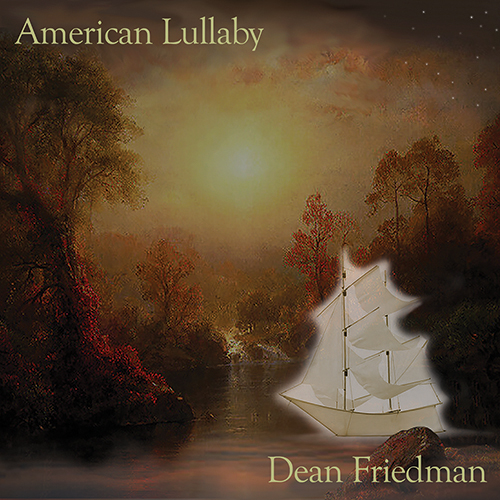
The first is Dean Friedman’s new offering called AMERICAN LULLABY. Dean has produced some excellent songs over a long career. He tours each year, Covid permitting, and has a big and supportive fan base that many would be proud of. He is an outstanding performer, and this album is one of his best ever. In the songs here he looks at what has been happening in the USA and around the world in recent years. This is a timely review by a great songwriter. So, this is my first choice and I recommend it highly. See Dean Friedman’s Official Music Web Site

My second choice would be the album from Bob Dylan “Rough and Rowdy Ways”. Although this came out in 2020, it is the resumption of Dylan’s Never Ending Tour after a Covid break that brings this to the forefront again. This is arguably one of Dylan’s best albums and he is performing tracks from this album on his tour, and doing so to great acclaim.
Albums | The Official Bob Dylan Site
Magazines to subscribe to in 2022

ACUMEN – Now under a new editor and still going strong after being founded by Patricia Oxley in 1985. This is one of the leading poetry journals and well respected by everyone in the poetry community. It is worth saying that Patricia and Acumen were very worth winners of the Ted Slade Award for services to poetry in 20015. Subscribe
Subscriptions :: Acumen (acumen-poetry.co.uk)

Magazines from Indigo Dreams Publishing. There are three great magazines from this publisher, and I could not decide which I should recommend, so better for you to have a look at their website and their three magazines to see which you might prefer, of course you might realise like I do that they are all equally good value for money and there is some great reading in every issue. The two editors are also past winners of the Ted Slade Award for services to poetry. See https://indigodreamspublishing.com
Posted in Uncategorized